Artificial Turf vs. Natural Grass: Which Is Better for Utah?
If you’ve ever tried to keep a lawn green through a Utah summer, you already know the struggle. Between the high desert climate, unpredictable water restrictions, and rising utility bills, more homeowners across Salt Lake City, Utah County, St. George, and beyond are asking the same question: should I stick with natural grass, or is it time to switch to artificial turf?
There’s no one-size-fits-all answer, but there is a right answer for your property, your budget, and your lifestyle. In this guide, we’ll break down the real differences between artificial turf and natural grass in a Utah climate — covering water use, cost, maintenance, durability, environmental impact, and resale value — so you can make a decision you’ll actually be happy with in five years, not just five months.
Why This Decision Matters More in Utah Than Almost Anywhere Else
Utah is the second-driest state in the country, and outdoor irrigation accounts for a huge share of residential water use — historically well over half in many communities. That’s exactly why the state has spent the last several years rolling out incentive programs to help homeowners rip out thirsty lawns. Utah’s Flip Your Strip and statewide landscape conversion incentives have paid residents anywhere from $1 to $3 per square foot (with higher local matches in some water districts) to replace traditional grass with water-wise landscaping, including artificial turf in many qualifying areas.
That’s not a coincidence. It’s a signal. Water providers across the Wasatch Front and southern Utah are actively trying to reduce the amount of grass in the state because the math on water scarcity doesn’t work otherwise. So while this decision is personal, it’s also playing out against a backdrop of drought, growth, and increasingly strict landscaping ordinances in cities like St. George, Washington, and Salt Lake City.
Water Usage: The Biggest Factor for Utah Homeowners
This is where the comparison isn’t close.
A typical natural grass lawn in Utah’s arid climate needs somewhere in the range of 20–25 inches of supplemental water per year just to stay green, depending on grass type, sun exposure, and elevation. On a quarter-acre lot, that can translate into thousands of gallons per watering cycle during peak summer months.
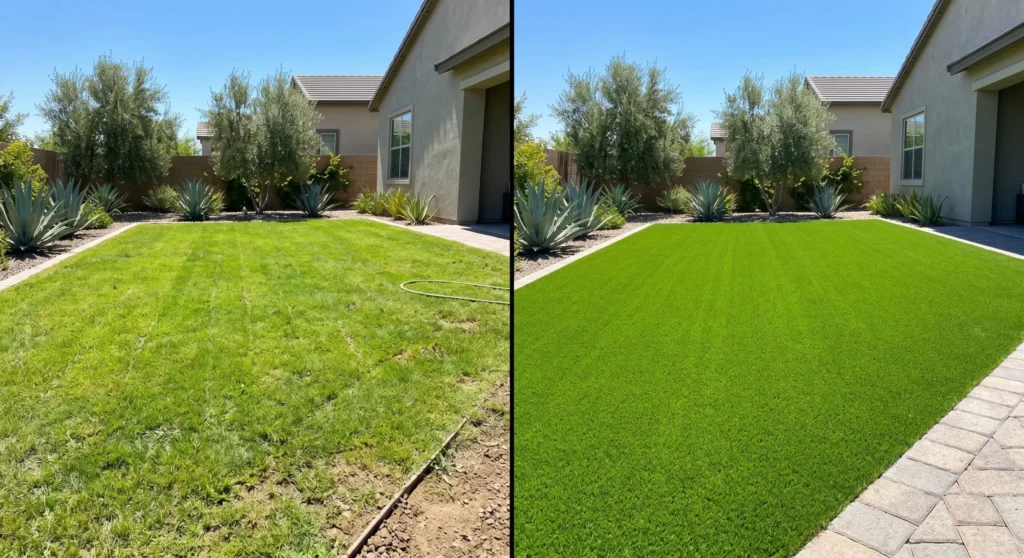
Artificial turf, once installed, needs essentially no irrigation. You might rinse it occasionally for dust or pet waste, but there’s no sprinkler system running three or four times a week from May through September. For homeowners on tiered water pricing (which most Utah cities now use, charging progressively more per gallon as usage climbs), that difference shows up directly on your utility bill.
Bottom line: If minimizing water use is your top priority — whether for cost, environmental, or drought-response reasons — artificial turf is the clear winner.
Upfront Cost vs. Long-Term Cost
Here’s where natural grass often looks better at first glance, and artificial turf catches up over time.
- Natural grass is cheaper to install initially, especially if you’re seeding rather than sodding. But it comes with ongoing costs: water bills, fertilizer, weed control, aeration, overseeding, mower maintenance or lawn care service fees, and occasional re-sodding of dead patches.
- Artificial turf has a higher upfront installation cost, typically ranging from $8 to $18 per square foot installed in Utah, depending on turf quality, infill type, and site prep. However, ongoing costs are minimal — no water, no mowing, no fertilizer, and no weekly maintenance.
Most Utah homeowners who switch to turf report breaking even on the cost difference somewhere between year five and year ten, depending on lawn size and local water rates. If you plan to stay in your home long-term, turf often pencils out favorably. If you’re planning to sell within a couple of years, the upfront cost may be harder to justify.
Maintenance: Time Is Money Too
Natural grass in Utah demands a real commitment: weekly mowing during the growing season, regular fertilization, aeration once or twice a year, dethatching, weed and pest control, and constant irrigation system upkeep (especially after a hard winter freeze-thaw cycle, which can crack sprinkler lines).
Artificial turf flips that equation. Maintenance is largely limited to occasional brushing to keep fibers upright, rinsing away debris, and periodic infill top-ups. There’s no mowing, no fertilizing, and no seasonal patchwork. For busy families, rental property owners, or anyone tired of spending Saturday mornings behind a mower, this is often the deciding factor.
Durability and Utah’s Climate Extremes
Utah’s climate isn’t gentle. Summers bring intense UV exposure and heat, while winters bring freezing temperatures, snow load, and de-icing salt near driveways and walkways.
- Natural grass can struggle with Utah’s alkaline soil, elevation-related sun intensity, and long dry spells, often requiring reseeding or resodding of stressed patches — especially in high-traffic areas or shaded spots.
- Artificial turf holds up well against UV exposure when it’s a quality product with proper UV stabilizers, and it doesn’t die back in winter or go dormant and brown in late summer the way many grass species do in Utah’s climate. It also handles foot traffic from kids and pets far more consistently, without the bare patches or mud that natural grass develops.
One caution: artificial turf can get noticeably hot to the touch during peak summer sun, more so than natural grass. If you have young kids or pets who spend a lot of time barefoot on the lawn, this is worth factoring in — cooling infill options exist but add to the cost.
Environmental Considerations
This is genuinely a mixed picture, and it’s worth being honest about both sides.
Natural grass supports local pollinators, contributes to natural groundwater recharge, cools the surrounding air through evapotranspiration, and is biodegradable. But in Utah, keeping it alive requires water that’s increasingly scarce, plus fertilizers and pesticides that can run off into local waterways.
Artificial turf eliminates water use and chemical maintenance, which is a significant win in a drought-prone state. However, it’s a synthetic, petroleum-based product with an eventual end-of-life disposal issue (most turf lasts 15–20 years before it needs replacing), and it doesn’t support soil health or biodiversity the way living grass does. It can also run hotter than surrounding grass or pavement in peak summer, contributing marginally to localized heat.
There’s no perfect environmental answer here — it depends on which trade-off matters more to you: water conservation or living ecosystem support.
Which One Is Actually Better for Your Utah Property?
- Choose natural grass if: you enjoy lawn care, want a yard that supports pollinators and natural cooling, plan to sell your home soon, or your property has access to affordable secondary water for irrigation.
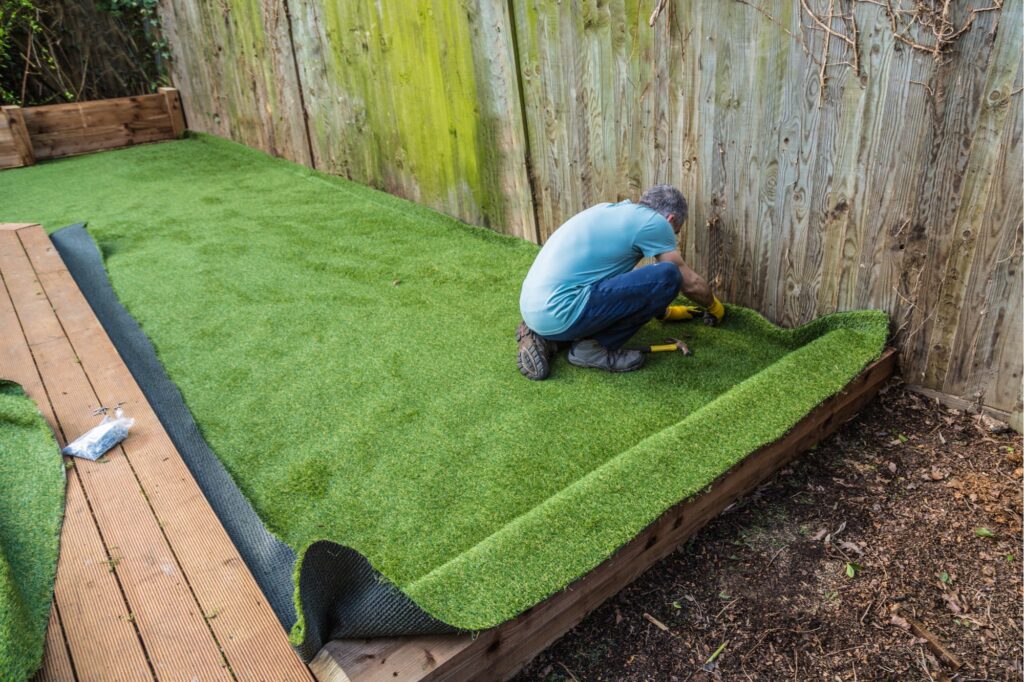
- Choose artificial turf if: you want to cut water bills and usage dramatically, you’re tired of weekly maintenance, you have pets or kids who use the yard hard year-round, or you’re in a city with tightening landscaping ordinances or drought restrictions.
Many Utah homeowners are also landing on a hybrid approach — artificial turf in high-traffic zones like backyards, dog runs, and park strips, combined with drought-tolerant native plants or a smaller natural grass area for aesthetic softness. This often qualifies for local water district rebates while still keeping some living landscape.
Frequently Asked Questions
Does artificial turf increase home value in Utah? It can, particularly in water-conscious markets or HOA communities with strict landscaping standards. However, buyer preference varies — some buyers value the low maintenance, while others prefer natural grass. Quality of installation matters more than the material itself.
Is artificial turf legal in Utah HOAs? Most HOAs in Utah now allow artificial turf, especially as water restrictions have tightened, but rules vary by community. Always check your HOA’s landscaping guidelines before installing.
How long does artificial turf last in Utah’s climate? Quality residential turf typically lasts 15–20 years with proper installation and occasional maintenance, even with Utah’s UV exposure and temperature swings.
Can I get a rebate for switching to artificial turf? In many Utah cities and water districts, yes. Programs through local water conservancy districts and the state’s landscape incentive program have offered rebates for replacing traditional lawns with water-wise alternatives, including turf, in qualifying areas. Check current program details with your local water provider, since funding and eligibility change over time.
Does artificial turf get too hot to walk on in Utah summers? It can get warmer than natural grass in direct summer sun. Lighter-colored turf, shade structures, or specialized cooling infill can help reduce surface temperature.
Is natural grass better for the environment than turf? It depends on the metric. Natural grass supports biodiversity and natural cooling but requires significant water and chemical inputs in Utah’s dry climate. Turf eliminates water use but is a synthetic product with its own environmental footprint.
Ready to Transform Your Utah Yard?
Whether you’re leaning toward a lush, low-water natural lawn or a completely maintenance-free artificial turf yard, the team at Bloomnest can help you design a landscape that actually works for Utah’s climate — not against it. From water-wise natural grass alternatives to premium artificial turf installation, we’ll walk you through your options, local rebate eligibility, and a plan that fits your budget and lifestyle.
Contact Bloomnest today for a free landscape consultation and find out which option makes the most sense for your home, your water bill, and your Utah lifestyle.